
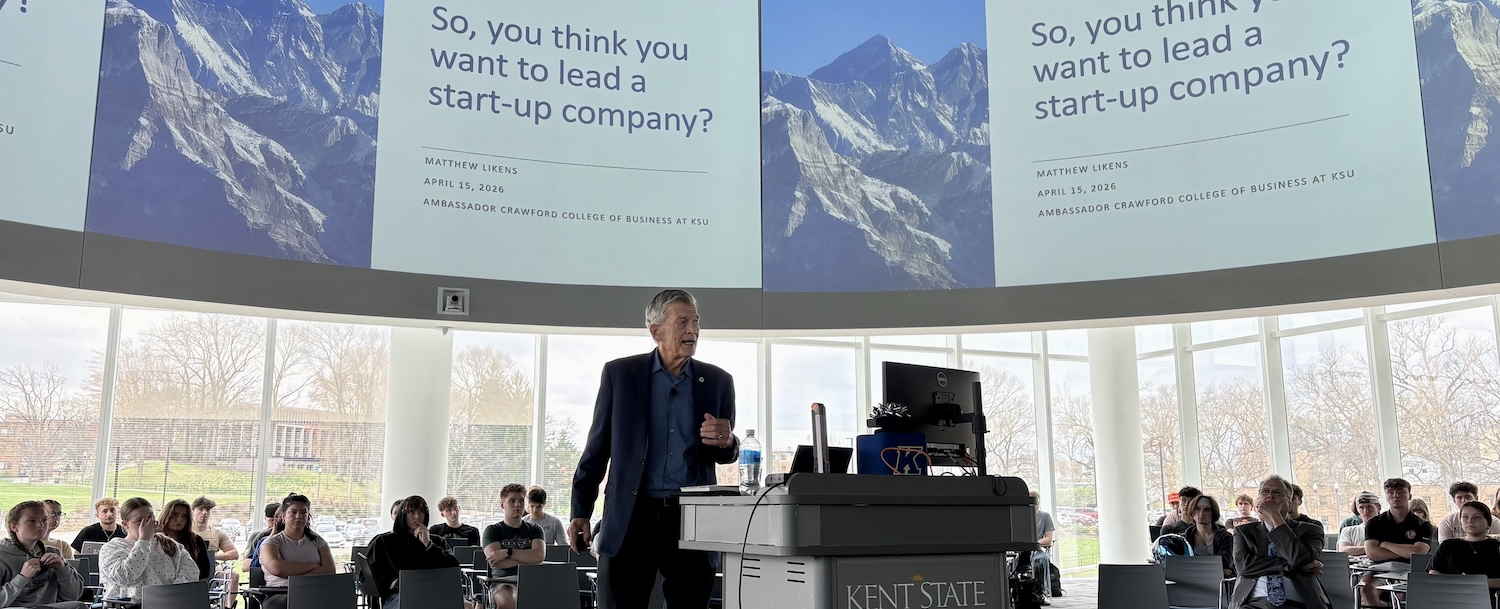
When Matthew E. Likens, 鈥�75, returned to 海角原创 on April 15 for the Michael D. Solomon Entrepreneurship Series, he brought students a candid look at the realities of leading a startup. Students got to see the highs, the failures and the lessons learned across decades in global business.
Likens, who earned a Bachelor of Business Administration in marketing from 海角原创 in 1975, spoke at the James R. Unger Global Forum in Crawford Hall.
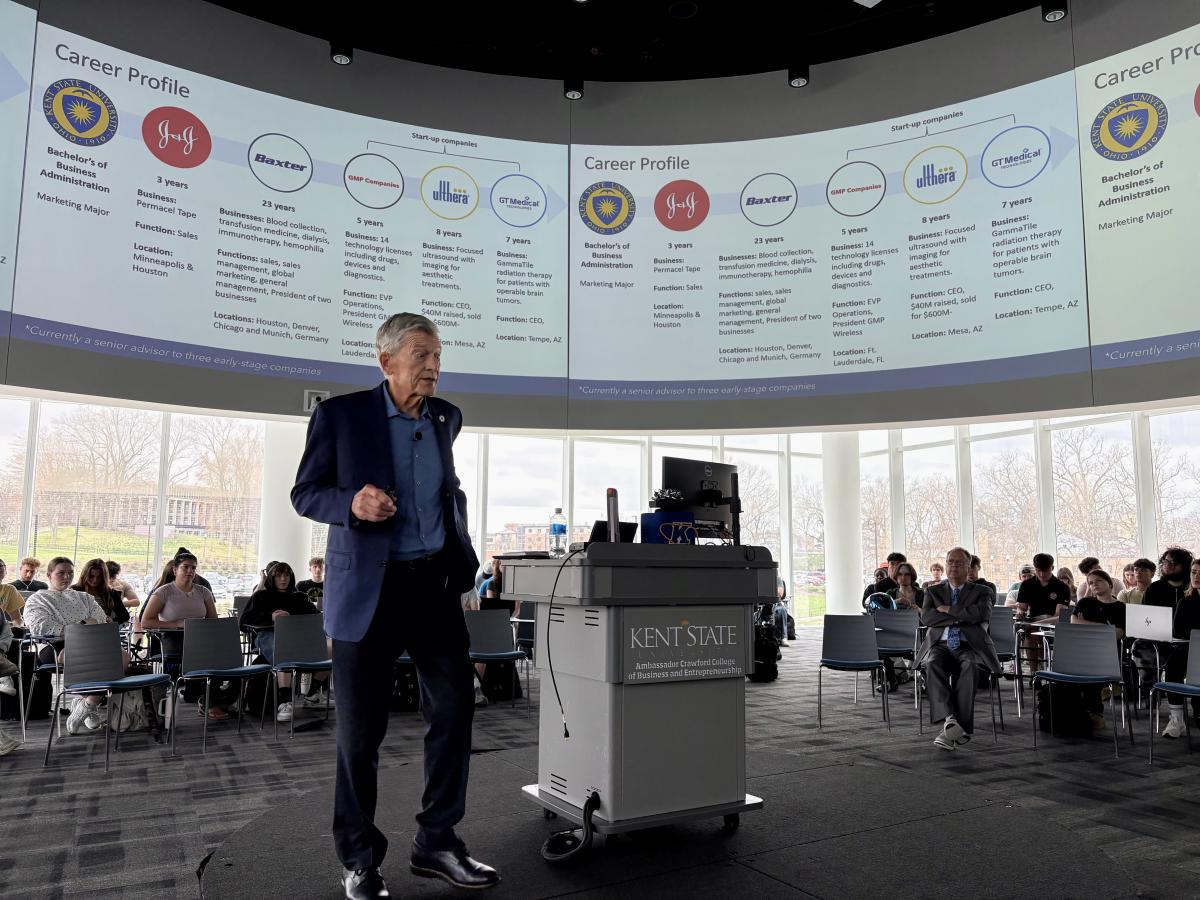
His talk, 鈥淪o You Think You Want to Lead a Startup?,鈥� walked students through his career from Johnson & Johnson and Baxter International to multiple startup ventures in Florida and Arizona.
He began with a photo from a recent trip to Nepal, where he saw Mount Everest.
鈥淚t was a crystal-clear day,鈥� he said to the audience. 鈥淚 always wanted to see the tallest mountain in the world. I didn鈥檛 want to climb it, but I certainly wanted to see it.鈥�
He told students that building a startup can feel similar, breathtaking, but demanding preparation and resilience.
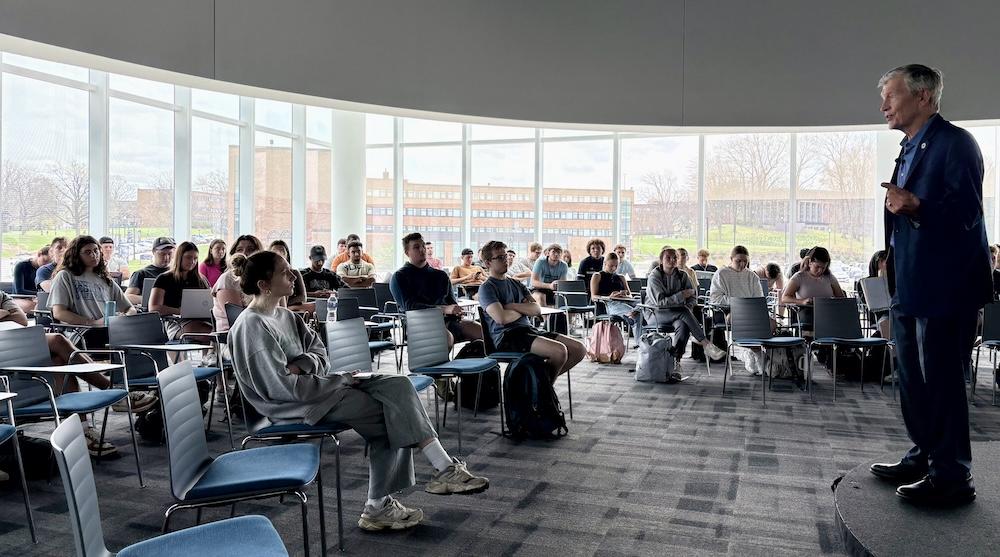
Students Say the Talk Offered Real-World Insight
For many students, the event offered a rare chance to hear directly from someone who had led companies through both rapid growth and difficult setbacks.
Senior accounting major Caden Hoobler said it was unlike anything he had experienced in class.
鈥淚鈥檝e never had an opportunity to hear someone who was a CEO or founder talk,鈥� Hoobler told 海角原创 Today. 鈥淪o, it was really interesting hearing a lot of the things that he had to go through, and then also just expressing the difficulties that are being the CEO and facing some of those problems.鈥�
Senior marketing major Zach Whetzel said the talk helped bridge the gap between coursework and real-world leadership.
鈥淚t shows you can get insight from outside sources, as opposed to just being within the classroom,鈥� Whetzel said.
One theme that stuck with Whetzel was Likens鈥� emphasis on giving employees a real stake in the company.
鈥淚 like how we talked about giving employee equity, because it turns it from, 鈥楬ey, this is my team,鈥� to 鈥楾his is our team, and this is our company,鈥欌�� Whetzel said. 鈥淓verybody has a better reason to come to work each day than just getting a regular paycheck.鈥�
Learning 鈥淓verything Not To Do鈥� in a Startup
Likens didn鈥檛 shy away from describing the missteps that shaped him. His first startup role at a company in Florida, he said, was a lesson in 鈥渨hat not to do鈥� during his five years there.
He said the experience revealed how quickly a company can lose credibility when leaders don鈥檛 model the values they preach.
鈥淵ou have a sacred responsibility to invest, to spend it in a way that鈥檚 as responsible as possible,鈥� Likens said. 鈥淚t鈥檚 your company, but it鈥檚 an investor鈥檚 dollars.鈥�
Finding Purpose in Later Ventures
Likens later became CEO of Ulthera, a medical ultrasound company that combines ultrasound imaging and therapy to treat subjects who are seeking cosmetic improvements to their skin. At first, he said, the work felt far removed from the life-saving medical devices he had worked on earlier in his career.
But the company eventually re-framed its purpose.
鈥淥ur media marketing said, 鈥榊ou know what we're doing, really? We're not just lifting tissue, we're lifting lives,'" Likens said. 鈥淭hese people feel better about themselves. They're more common because they look younger, more vibrant and that lets them be more effective.鈥�
Ulthera grew from zero revenue to nearly $100 million before going public in January 2014, and was acquired by Merz Pharma out of Frankfurt, Germany, for $600 million in July 2014.

After, Likens joined GT Medical Technologies, where he helped advance GammaTile, a radiation therapy for patients with operable brain tumors.
He said recent clinical data show survival increasing from 11.7 months under standard care to 42.5 months with GammaTile.
鈥淭hat鈥檚 maybe the most gratifying thing that ended up relatively late in my career,鈥� Likens said.
Define Your Values, Ask Questions and Don鈥檛 Rush to Raise Money
Throughout the talk, Likens emphasized that leadership begins with self-awareness.
鈥淵ou have to be authentic as a leader,鈥� he said. 鈥淵ou have to be true to whoever you actually are as a person.鈥�
He urged students to seek mentors and ask questions, even when it feels uncomfortable. But Likens also warned against raising money too early for a startup.
鈥淣o, don't raise money. Not yet. Wait. Wait as long as you can, by being responsible,鈥� Likens said. 鈥淭he longer you keep full ownership of the company and don't have that additional obligation to outside investors, the more you're in control of your own future.鈥�
One of the most important things Likens emphasized is that failure is part of the process.
鈥淲e tried a lot of different approaches,鈥� Likens said. 鈥淲e knew that a lot of them wouldn't work, but they were going to pay off the value of time. So, work at any company, but certainly at an early-stage company. So, be willing to fail, don鈥檛 be discouraged by it and know that each failure is a learning opportunity.鈥�
Learn more about the Ambassador Crawford College of Business and Entrepreneurship and future events.