
In 2001, the Herrick Aquatic Ecological Research Facility (HAERF) was built to replace a wetland that was cleared away when the Warren Student Recreation & Wellness Center was built, and it was built with KSU researchers in mind. There are 10 independent pools in the HAERF which are able to be manually drained or raised, creating a situation where variables can be controlled. The Herrick facility, in effect, creates a 鈥減layground鈥� and a rich learning environment for researchers, like KSU Biology students Nick Brocato and Tamera Owens.
Brocato and Owens both spent Summer 2025 as SURE (Summer Undergraduate Research Experience) researchers. SURE provides an opportunity for students to devote full attention to research, rather than splitting focus with coursework. The eight-week SURE program provides funding and on-campus housing for its researchers under the supervision of an advising professor. Dr. Lauren Kinsman-Costello was mentioned by Brocato and Owens as having opened the door for their recent wetland studies, and it is in Kinsman-Costello鈥檚 freshwater ecology lab that Brocato and Owens do their work.
Senior Nick Brocato has spent two years working in KSU labs, with the wetlands study representing is his first time spearheading a research project. He began research by reading current studies and establishing a subject, which amalgamated to investigating sodium chloride deposition in wetlands. Brocato spent the next semester assisting Michael Back, a 5th year Environmental Studies doctoral student, in taking and analyzing water samples from HAERF. They learned from the samples that the wetlands in HAERF are near brackish, exceeding almost double the salt content limit for safe drinking water. This finding opened the door to a new research question revolving around levels of acceptable salt content in the soil.
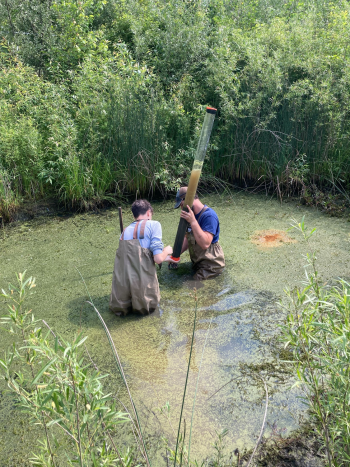
The study鈥檚 overarching question concerns how well nutrients (specifically sodium chloride) are stored in soils. Wetlands are capable of absorbing pollution and often support the ecosystem around them in doing so. Wetlands prevent pollutants, which can be an excess of nutrients or runoff from cities, from reaching freshwater rivers and streams that we use for our drinking water. Runoff from city streets during wintertime road salting can create an ecological risk. This salt has to be stored, because it cannot easily turn into a gaseous form (and a gaseous form would be a greenhouse gas pollutant still). So, how much salt is this particular wetland storing, and how much can it handle before there鈥檚 no more absorption and salt flows into the river?
Back became a mentor for Brocato as this question formed, and encouraged him to apply for the SURE program to complete his research. Back himself had had a wonderful experience as a SURE student when he was an undergraduate!
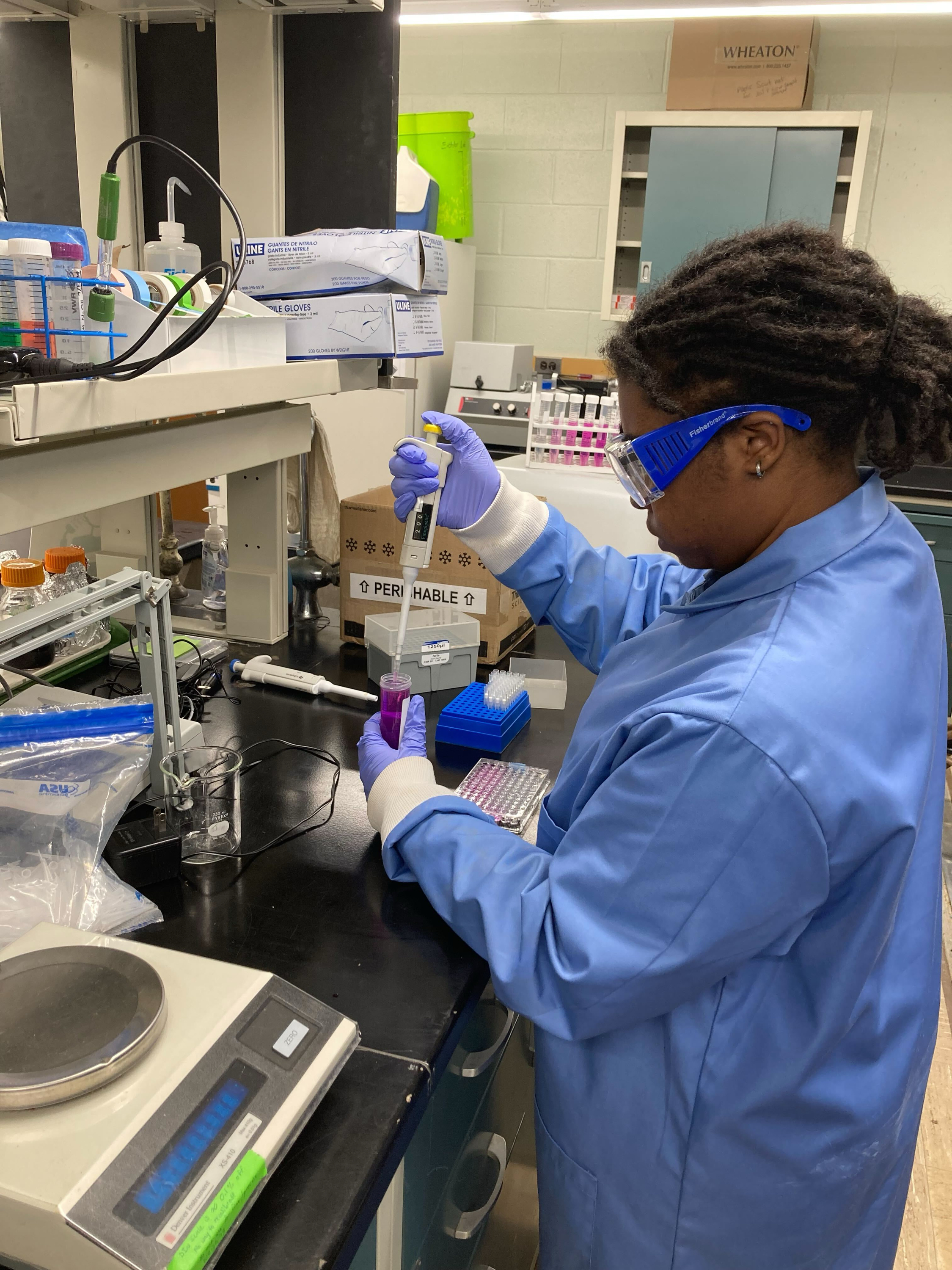
During Summer 2025, Brocato and Back collected data by taking soil cores, and cutting them up into five centimeter increments. Five centimeters is significant, because it represents the average amount of annual soil accumulation. The researchers weighed these cut samples, and then they burned organics off soil to see how much of the sample actually is dirt. These samples are weighed again. After that, Brocato took extractions, targeting specifically the nutrient he wanted to extract, converting them to liquid, and measured again.
Brocato鈥檚 data created a baseline for future researchers, and begins the start to making a new push for sustainability at 海角原创.
鈥淭his research opens up several next steps,鈥� Brocato explained. 鈥淲e need to, next step, investigate and test alternatives for salt if we do not want to pollute. People always need clean water and healthy food and that is where ecologists come in.鈥�
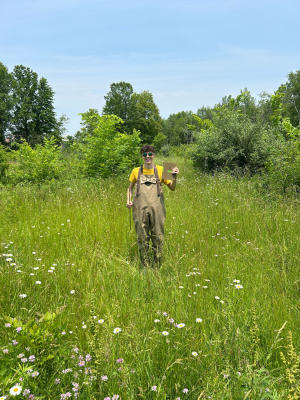
Brocato grew as an inquisitive researcher, starting with a shaped question and then developing an investigative process. He is now processing the data he has collected and working to synthesize these data into findings.
Reflecting on his growth, Brocato shared: 鈥淚 think that you should take pride in your research no matter what you鈥檙e doing, especially if it鈥檚 helping the environment.鈥�
Sophomore Tamera Owens spent her summer assisting former SURE participant and current graduate student Daiyanera Kelsey with tracking carbon content in the soil. The questions centered around how deposits looked in higher versus lower elevations, in wet or dry sections of the wetland, and even if elevation had much to do with moisture content. Though it was Kelsey's research question, Owens described how Kelsey would ask her consistently for input and ideas, or even about what kind of work she would prefer for the day.
鈥淪he鈥檚 very open to change, and that鈥檚 what I like about Dae,鈥� Owens said. 鈥淪he sent me all these papers to read about it. She gave me all these lessons. When she gives me tasks, she is very thorough on her breakdowns of what to do, and if I don鈥檛 know something, she鈥檒l just teach it to me.鈥�
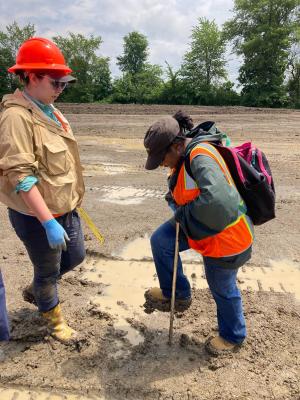
Owens鈥� and Kelsey鈥檚 main focus was studying the Pilot Watershed in Dunkirk, OH, which is man-made, similar to KSU鈥檚 own HAERF. The main difference is, the Pilot Watershed is new and lacks plant life, having been created in 2021. Owens described the Dunkirk wetland as looking 鈥渓ike a construction site鈥�.
Owens and Kelsey only visited this watershed once to take cores, but the data collection on these samples continued throughout the summer. But, this wasn鈥檛 Owens鈥檚 only field experience during Summer 2025. She also assisted another graduate student in taking samples from Magee Marsh along the Lake Erie coastline; and described her experience as 鈥渞eally digging in the dirt鈥�.
鈥淲e took a soil sample where you have to take a syringe, and you cut the tip off, and you stick it down in the water and it suctions up dirt. Then you have to hold it and put it in a bag鈥� I was really nervous to do it because I鈥檇 never done anything like that before, and also there were leeches in the water,鈥� Owens said with a chuckle.
Owens also mentioned how working in a lab isn鈥檛 like what you see on TV or in movies.
鈥淢y first day at work all I did was sit down at a table and take algae filters and weigh them. I worked with those same algae filters for about a month. I went from weighing them to pouring acid into them, to labelling tubes for them, to pipetting acid out of them into a different tube,鈥� Owens described. 鈥淚t was a whole thing, but it also goes to show how much you can work with one thing.鈥�
Owens is majoring in Pre-Dentistry, an academic discipline in the field of Biology. Though her wetlands research is far removed from what one would expect a pre-dental student to be doing, Owens is grateful for the experience and cherishes her time in the lab and the lessons she鈥檚 learned there. She noted, 鈥淭he biggest lesson I learned in the lab was listen 鈥ot just listen, but learn everything you can. Take the opportunity to learn something new, to see something different.鈥�
Both Owens and Brocato will finish processing their data and are preparing to present their research at the Three Minute Thesis competition in October. Both encouraged other KSU student researchers to join the SURE program.
鈥淚 don鈥檛 know of anything that would be a better experience for an undergrad to do. If you鈥檙e thinking about doing it, I would say, do it now. Do it before it鈥檚 too late. Don鈥檛 be scared. Don鈥檛 be nervous that you鈥檙e not going to know enough.鈥� Brocato said.